Hidden Costs
 Credit unions’ federal tax exemption costs the U.S. more than $3.1 billion per year. Without reporting requirements holding them accountable to their mission, it remains unclear what exactly taxpayers get in return.
Did you know that credit unions and banks are different? Credit unions are not taxed, regulated, or insured like banks, and this gives them a competitive advantage against banks - while increasing your risk, when you deposit your money.
We need Congress to modernize the rules around credit unions, to make them safer for you as a consumer, and to keep your local banks available for all your neighbors who rely on them. Look into the impact of credit unions in your community, and let your senators and representatives know your concerns.
Hidden CostsCredit unions’ federal tax exemption costs the U.S. more than $3.1 billion per year. Without reporting requirements holding them accountable to their mission, it remains unclear what exactly taxpayers get in return.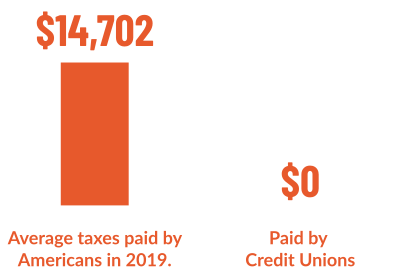
 Expansion
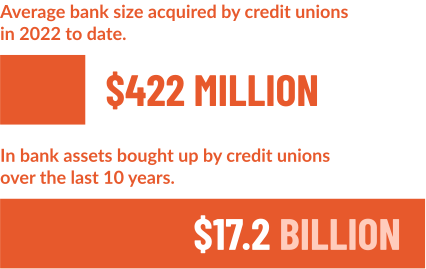
 During the Great Depression, the federal government incentivized credit unions to provide consumer-focused financial services to people of modest means by granting them a tax exemption. However, the industry has evolved over the last 100 years — calling into question their preferential tax and regulatory treatment.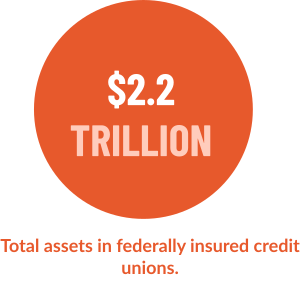
 Accountability
 Given the services they provide and their structure, credit unions should presumably adhere to stringent regulatory requirements — like banks do — and public disclosure requirements — like nonprofits do — but neither is the case. These substantial regulatory and disclosure gaps shield the credit union industry from proper scrutiny, which is a disservice to all Americans.